Sciatica is something we see every week in our office. And most of the time, even though people feel discomfort in their glutes, legs, or feet, the root cause is typically pressure on the nerves in the lower back.
Some people describe sciatica as sharp or shooting pain down one leg. Others notice burning, aching, numbness, or tingling in the hip, glute, or even their feet. It may come and go, or be constant. Either way, it can be really uncomfortable, frustrating, and exhausting.
At the root of all these body signals is the sciatic nerve.
The sciatic nerve is the largest in your body. Think of it like a thick electrical cable. It starts from multiple nerves in your lower back, then comes together, runs down through your hips and butt, and travels all the way down the back of your leg to your foot. This nerve plays a huge role in how your legs move and feel, and in how supported your lower body feels day to day. The same nerves that form your sciatic nerve also come around and go to your digestive system and reproductive system. We see people struggling with leg pain and also experiencing gut issues, bladder issues, and even menstrual cycle/fertility issues.
Because it’s such an important nerve, when it’s compromised or irritated, it can have a significant impact.
Only 10% of the nerves in our spine sense pain, so 90% of the time, you can have pressure on your nerves and feel fine. So symptoms (body signals) are usually the last thing to show up.
What makes sciatica especially challenging is that it usually doesn’t happen all at once. It builds slowly. Life happens. Sitting more. Moving less. Old injuries. Stress. Your body does its best to adapt—until it reaches a point where it just can’t anymore.
Many people are told to rest, take medication, stretch, or just wait it out. While those things might help temporarily, they don’t answer the deeper question: Why is the nerve irritated to begin with? When that question isn’t addressed, sciatica often returns or never fully resolves.
A different approach examines how the spine and nervous system function together. When pressure on the nerve is reduced and communication improves, the body is often able to heal in a much more lasting way. And get back to adaptability and resiliency.
That’s the approach we take at Revive. In the next section, we’ll walk you through exactly how we help people with sciatica get answers, find clarity, and regain confidence in their body’s ability to heal again.
$75 New Patient Special
Includes Initial Consult & Examination, Thorough Medical History, X-Rays (if needed), Complimentary Doctors Report of Findings
How Our Care Plan Works
1. Better
The Better phase is where momentum begins. Here, we stabilize the problem, stop the damage, and activate your body’s natural healing power. By addressing the root cause, we interrupt the downward spiral and initiate forward movement. This is the first push—setting everything in motion and creating the foundation for meaningful transformation that builds with every step forward.
2. Stronger
In the Stronger phase, momentum accelerates. Your body begins to respond, adapt, and rebuild. We retrain your structure, strengthen weakened areas, and improve overall function so your health doesn’t just return—it grows. As your body becomes more stable and capable, each improvement fuels the next, creating a powerful cycle of resilience and lasting strength.
3. Healthier
The Healthier phase is all about maintaining momentum. With the groundwork laid and strength established, we help you stay on a steady path—preventing setbacks, reinforcing progress, and maximizing long-term wellness. This phase ensures the gains you’ve made aren’t just preserved, but multiplied, propelling you into a future of sustained energy, clarity, and health.
How We Treat Sciatica In Little Canada, MN
Comprehensive Consultation and Exam
At Revive, we focus on finding the root cause of your sciatica, not just where you feel pain or have symptoms. Pain is usually the last thing to show up, so it is key to know when the underlying problem actually started. Your first visit begins with a thorough consultation to understand your health history, your symptoms, and how your body has been functioning over time. This helps us uncover neurospinal patterns that have been contributing to the interference with the sciatic nerve.
We then perform a detailed exam to identify areas of interference along your spine that affect how your body is healing and functioning. This includes posture assessments, range-of-motion testing, and spinal evaluations. We use digital X-rays to assess structural changes and INSIGHT scans to evaluate the extent of nervous system compromise. It’s key to see what’s happening beneath the surface.
From there, our recommendations are always based on two things: our exam findings and your goals. This allows us to create a specific care plan focused on correcting the underlying issue and supporting your long-term results—not just short-term relief.
Specific Chiropractic Care in Little Canada, MN
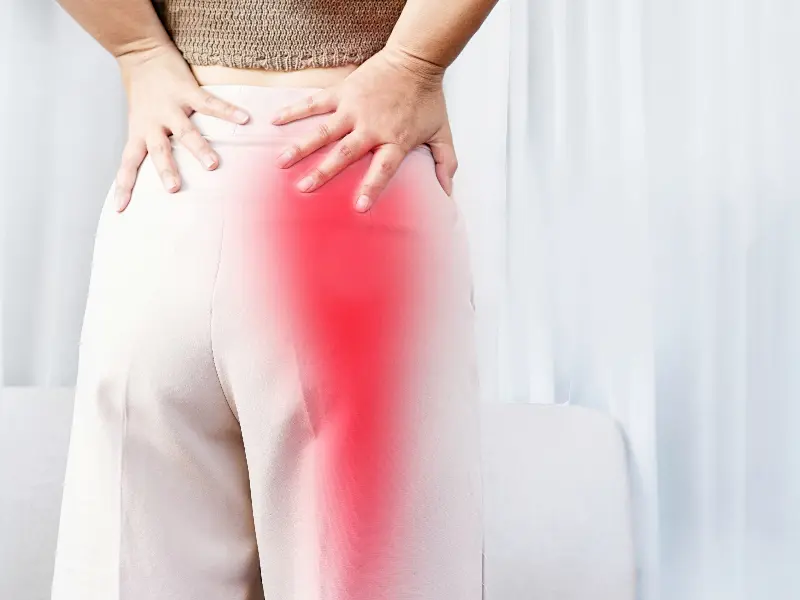
At Revive, sciatica care focuses on improving neurospinal function—how well your nervous system can do its job! Since the sciatic nerve begins in the lower spine, stress in this area will directly affect how body signals manifest down the road in the low back, glutes, legs, and feet.
Our goal is to identify areas of spinal stress or subluxation (where the spine has shifted) and how they specifically compromise the sciatic nerve. Through specific chiropractic adjustments, we help restore alignment and reduce stress on the nervous system at the source, rather than just chasing symptoms.
We use digital X-rays to understand better the spine’s structure, how long certain patterns may have persisted, and how much strain the spine has been under. We also use INSIGHT scans to see how the nervous system is responding in the moment.
Together with your exam findings and goals, this provides a clear, specific care path and plan that will empower you to achieve the results you want, not just temporary relief.
Custom Therapeutic Exercise
Muscles are slaves to the nerve. When the nervous system is under stress, muscles adapt by tightening or compensating, which can pull the spine back into old patterns.
Corrective exercises help retrain the muscles around the spine to support its new, healthier position. This helps your body retain the changes made through chiropractic care so improvements last not just temporarily but long-term.
Breaking Bad Habits & Spinal Hygiene
Everyday habits often influence Sciatica—how you sit, stand, move, and rest.
Over time, these patterns accumulate and can quietly shift the spine out of alignment due to stress.
Spinal hygiene is similar to dental hygiene. Just like brushing and flossing protect your teeth between dental visits, healthier movement habits support your spine between adjustments. Small, consistent changes help reduce stress, encourage healing, and prevent old patterns from creeping back in.
Wobble Disc & Disc Health
Spinal discs sit between the bones of your spine and act as shock absorbers. After about age 12, discs no longer have a direct blood supply and instead rely on movement to remain hydrated and healthy in size.
Gentle wobble motion helps discs push out waste and pull in fresh nutrients—much like squeezing and releasing a sponge.
That’s where tools like a wobble disc are so incredibly helpful. Wobble disc exercises create small, controlled movements that help “pump” the discs and stabilize the muscles around the spine.
Common Causes of Sciatica in Little Canada, MN
Sciatica isn’t the problem by itself. It’s a sign that something is putting stress on the nerves in the lower back. There are a few common reasons we see this happen, and most of them develop over time—not all at once.
Here are some of the most common causes we see in our office.
Herniated Lumbar Discs
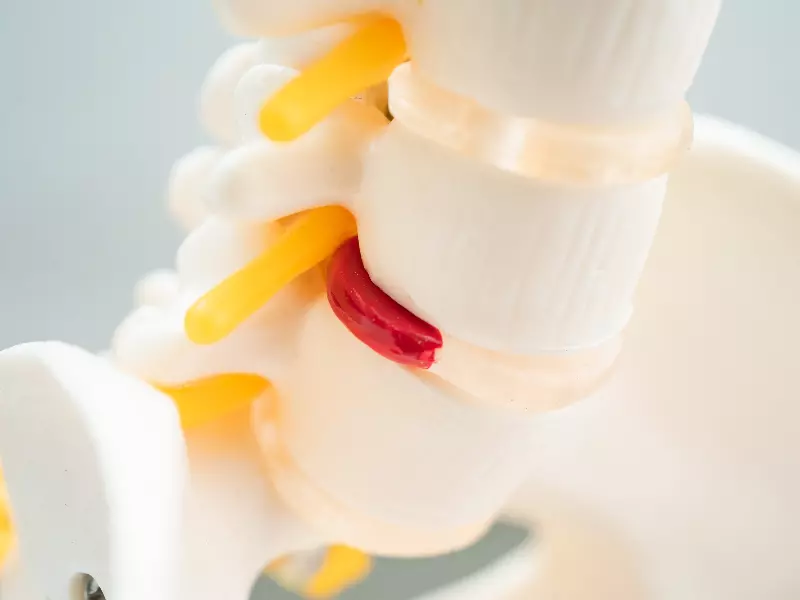
Between each bone in your spine is a disc. These discs act as cushions, helping your spine handle movement and load. They have a softer center and a tougher outer layer.
Over time, stress, poor movement, or long-standing tension can cause a disc to bulge or tear. When that happens in the lower back, it can irritate the nerves that become the sciatic nerve. This is often when pain starts traveling into the hip or leg. Care focuses on helping the spine move better and reducing pressure on the nerve so the disc can calm down and heal.
Degenerative Disc Disease
Despite the name, this isn’t really a disease. It’s more about wear and tear that occurs when the spine has been under long-term stress.
Discs can lose hydration and flexibility, which makes them less effective at absorbing movement. That extra stress has to go somewhere, and often it shows up as nerve irritation or sciatica. Our goal is to improve how the spine and nervous system work together so the body doesn’t keep breaking down in the same way.
Spinal Stenosis
Spinal stenosis means there’s less space inside the spine for the nerves. In the lower back, this can affect the nerves that travel into the legs.
People with stenosis often notice leg pain, heaviness, or numbness—especially when standing or walking for a while. Sitting or bending forward usually feels better. Stenosis tends to develop slowly, and care focuses on improving movement, reducing nerve stress, and helping the body function better with the structure it has.
Muscle Strain or Spasm
Muscles can absolutely play a role in sciatica, but they’re usually reacting to something else. When the spine isn’t moving well, muscles often tighten up to protect the area.
Those tight or strained muscles can change how the lower back moves and increase pressure on the sciatic nerve. Stretching can help temporarily, but recurring muscle issues are often a sign that the spine and nervous system need attention—not just the muscles themselves.
Spondylolisthesis
Spondylolisthesis happens when one spinal bone shifts forward compared to the one below it. This alters how the spine moves and can put stress on nearby nerves.
Not everyone with this has pain, but when it does, care focuses on improving stability, reducing nerve irritation, and helping the body adapt safely over time. Many cases respond well to conservative, movement-based care.
Check Out Our Location Near You
125 Little Canada Rd W #115, Little Canada, MN 55117
Frequently Asked Questions
Should I see a chiropractor for my sciatica?
Yes! Sciatica usually means a nerve in the lower spine is under stress. We are specifically trained to find exactly where that neurospinal stress is and how to correct and clear it. Rather than guessing or just managing pain, we focus on finding the root cause of the problem so you can not only feel better, but truly heal for the long term.
What can I do to relieve my sciatica pain?
The most important step is figuring out why it’s happening. At Revive, we take time to understand your history, evaluate how your spine and nervous system are functioning, and utilize specific testing and imaging when necessary. Once we know what’s causing the nerve irritation, we can create a clear plan to address it—rather than just masking symptoms.
How should I sleep if I have sciatica?
Most people are most comfortable lying on the side that isn’t painful, with the sore side on top. Bending your knees slightly and placing a pillow between them can take pressure off the lower back and sciatic nerve. The goal is to keep the spine as relaxed and supported as possible.
Can stretching make sciatica worse?
Yes, it can—especially if the stretch isn’t right for what’s causing your sciatica. Some stretches can irritate an already sensitive nerve. That’s why we don’t recommend random stretching. Any exercises or stretches should be chosen based on your specific spinal and nerve patterns.
What causes sciatica flare-ups?
We all know stress causes inflammation. And there are three forms of stress: thoughts, traumas, and toxins. Accumulated stressors often trigger flare-ups over time, such as prolonged sitting, poor posture, awkward lifting, tight clothing, a high-demand lifestyle, or sudden increases in activity. These don’t usually cause sciatica on their own, but they add to an already stressed nervous system.
How do I get my sciatic nerve to stop hurting?
The most important step is understanding why the nerve is irritated. A thorough chiropractic evaluation helps identify the source so care can focus on resolving the problem—not just chasing the pain. But a good next step for temporary relief is to stop whatever activity made it worse and use ice to calm the inflammation.
$75 New Patient Special
Includes Initial Consult & Examination, Thorough Medical History, X-Rays (if needed), Complimentary Doctors Report of Findings